The Role of the Employer
Survey respondents indicated that employers should play an active role in supporting employee health and well-being and provided clear focus areas for employer involvement and engagement.

Employees Want More Support from Their Employers
Employees are clear on their stance. Employer support for health and well-being isn’t a nice-to-have; it’s an expectation.
And that expectation for support goes beyond basic benefits. Only 22% believe an employer’s role in health should be limited to providing insurance and benefits.
This trend is even more pronounced the larger the organization is. Among very large employers with 10k+ employees, 83% of respondents say employers actively support employee health, compared with 75% from small companies.

My employer could improve my overall health and well-being by offering more mental health support such as free counseling sessions, flexible work schedules to support work life balance, wellness stipends for gym memberships or healthy meals and regular wellness check-ins.
– Man, 35 | Large-size Company
The survey results paint a holistic picture of the employer’s role in the health of their employees. Employees don’t just want support for mental, physical, and financial health. They also want targeted workplace policies to support well-being.
Of respondents believe employers should play an active role in supporting employee health and well-being.
Top 5 Areas of Expected Support
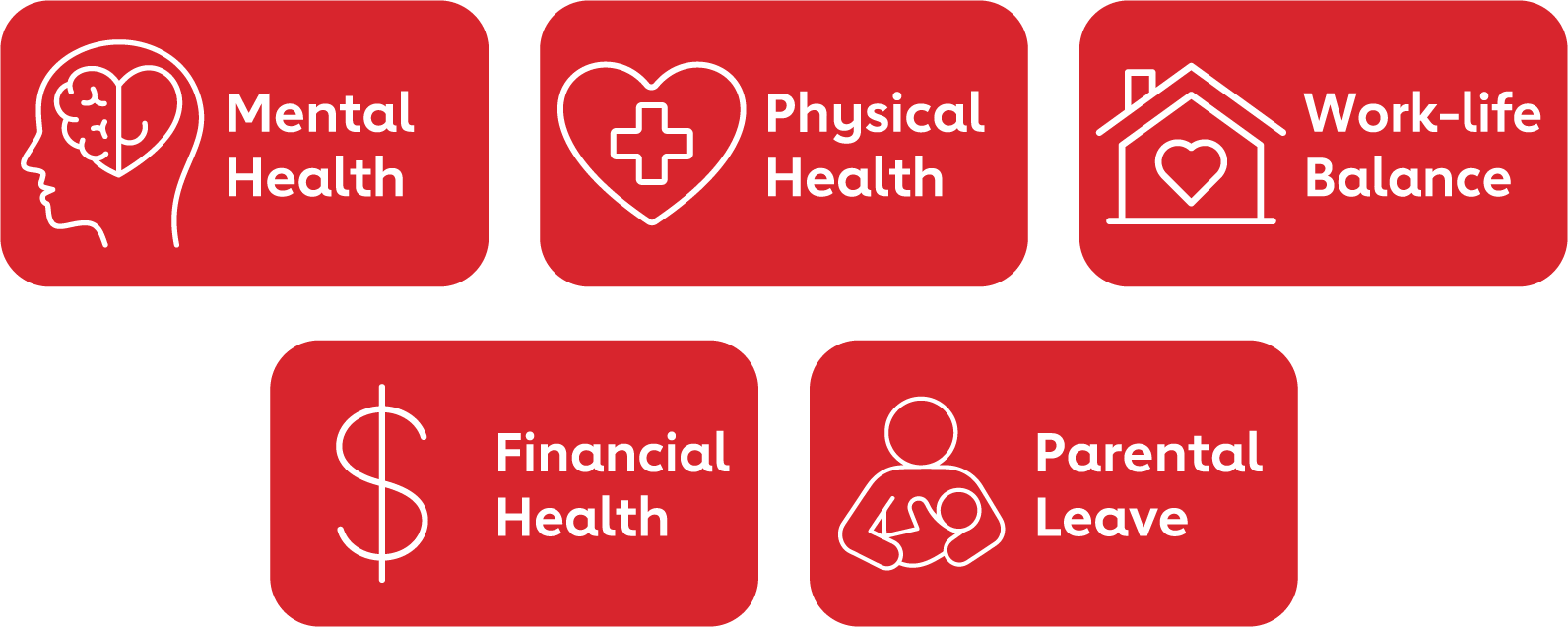
A Note on Very Large Orgs
Employees from very large organizations rated support for work-life balance, parental leave, and childcare ~10 percentage points higher, on average, than those from smaller companies.
Employees Feel Mixed on Employer Intent to Support vs. Their Experience of Support
TWhile 84% of employees believe their employers want to support their health and well-being, 50% agree their jobs make it difficult to prioritize their health.
TThis trend is even more pronounced for employees at very large companies, 55% of whom note difficulty in prioritizing health.
TThis disparity suggests there is room for more substantial, practical support within the workplace to ensure that health and well-being are appropriately prioritized.
TCompared to other workplace perks, employees want to see more active investment in health programs and resources, with 87% prioritizing health-focused support over offsite activities, in-office food and drinks, or game rooms.
Of respondents would welcome more health-related support from employers.
Having a strong work-life balance from C-Suite and executive level down – to highlight that having balance is encouraged – would be tremendous.
– Woman, 43 | Very Large-size Company
Organizational Culture and Leadership Examples Matter to Employees
Employees look to organizational leadership to demonstrate not only their commitment to supporting employee health, but also to set an example through their own values and behaviors.
Of respondents believe that health and well-being should be reflected in their organization’s policies.
Driving Organizational Culture
Employees want health and well-being policies and initiatives embedded in their workplaces.
In practice, that looks like:
- Company leadership demonstrating good work-life balance (93%)
- Opportunities to volunteer for causes they care about (80%)
- Supporting health and well-being through the organizational approach to day-to-day work (92%)